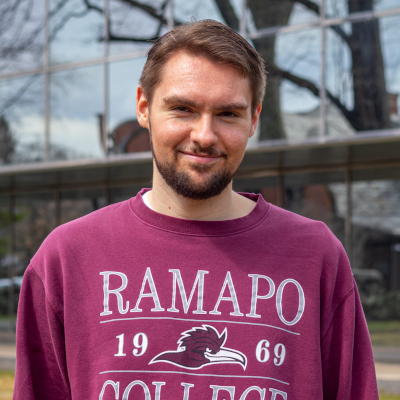
Personal Statement
As a highly motivated, punctual, and team-oriented individual, I am passionate about partnering and working with small businesses to help them reach comprehensive, secure, and versatile IT systems without sacrificing massive amounts of time or breaking the bank. This is my motivation because my career has always been hands-on, blue-collar work that has inspired a commitment to providing transparent and reliable computer and software solutions including: hardware installation, management systems, and communications infrastructure; proving that quality IT infrastructure and business software is well within reach for non-corporate businesses.
Education

Ramapo College of New Jersey
Master of Science, Computer Science
Master's Thesis
"Methodology for Abstracting and Comparing Recipes Using Directed Acyclic Graphs"
Ramapo College of New Jersey
Bachelor of Science, Computer Science
Relevant Coursework:
Experience

Systems Administrator
BrightStar Care of Somerset
Deli Associate
Lasolas Market
Assistant Arts Department Director
Ockanickon Scout Reservation
Skills
IT:
- Server, workstation, etc. design
- Network design
- Windows Server + Active Directory
- Linux
- Cabling and hardware installation
- Basic laptop/desktop repair
- Data recovery and preservation (digital and analog)
- Security and policy + HIPAA compliance
- Customer service and help desk
Programming:
- Functional, OOP, and other paradigms
- Web development (front and back end)
- Database design
- Advanced proficiency in C/C++, Python, PHP, HTML, CSS, JavaScript, SQL
- Proficiency in Java, C#, .NET environment, Android ecosystem
Networking:
- DNS, DHCP, firewall administration
- Remote storage (Samba, NFS, etc.)
- Mail systems
- Web hosting
Marketing:
- Multimedia editing
- Social media management
- Technical writing/diagramming and training